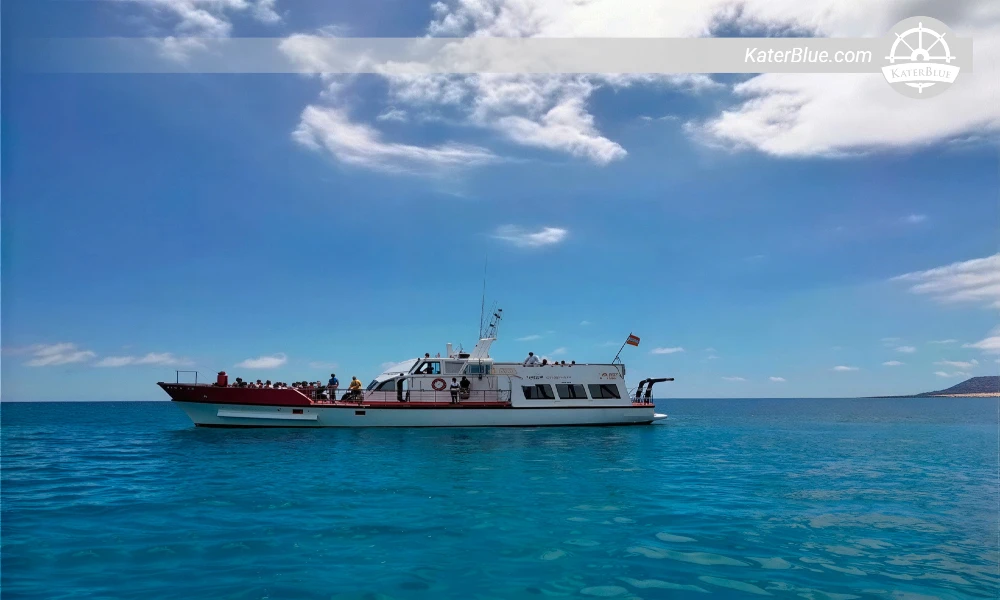
1974 Commercial Passenger and Tourism Monohull for Sale – 25.45m, 112 Passengers – Canary Islands
Canary Islands, Spain
Tipo de embarcação
Barco a motor
Modelo
KB - LB 25m
Ano de construção
1974
Estado
Totalmente operacional
Descrição do produto
1974 Commercial Passenger and Tourism Monohull for Sale – 25.45m, 112-Passenger Capacity – Canary Islands, Spain
This substantial 25.45-metre passenger and tourism monohull presents a rare commercial acquisition opportunity for operators seeking a proven platform with capacity for up to 112 passengers. Based in the Canary Islands, Spain, the vessel has been purpose-configured for passenger transport, sightseeing and maritime tourism activities, offering a robust hull, dependable twin-engine propulsion and a practical range of navigation, safety and hospitality equipment.
Built in 1974, the vessel reflects the durable construction standards and operationally focused layouts associated with established commercial passenger craft. Her generous beam, spacious passenger areas and conventional engineering configuration provide a reliable foundation for continued tourism operations, coastal excursions, ferry-style services, event cruises or conversion to another approved passenger-carrying role, subject to current regulations and the purchaser’s intended area of operation.
Commercial Registration and Documentation
The vessel is reported to be registered under the Spanish 2nd List, a registration category associated with commercial maritime activity. The supplied sales information states that her documentation is in order and records an inspection date of September 2025.
As September 2025 has already passed, prospective purchasers must obtain and verify the vessel’s current inspection certificate, any renewal documentation, passenger certification, commercial operating permissions and safety-equipment validity before relying on her present operational status. The seller or appointed representative should provide updated documentary evidence during due diligence.
Subject to satisfactory verification of the current regulatory file, the existing commercial registration may offer significant value to an operator seeking to acquire an established passenger vessel rather than begin with a private craft requiring extensive conversion or reclassification.
Dimensions, Hull Construction and Passenger Capacity
The vessel measures 25.45 metres in overall length and 5.20 metres in beam. These dimensions provide a broad and stable platform with sufficient volume for passenger circulation, crew operations, service facilities and essential technical spaces. Her polyester hull construction has been selected for durability, corrosion resistance and manageable maintenance in demanding marine environments.
The hull form and general layout have been developed around commercial practicality rather than private-yacht styling. This operational focus supports stable passenger movement, efficient boarding and disembarkation and straightforward crew supervision. Capacity for up to 112 passengers makes the vessel suitable for operators requiring meaningful revenue potential from each departure.
Potential applications may include coastal sightseeing, island excursions, wildlife-viewing operations, harbour tours, scheduled maritime transport, private-event cruises, educational voyages or tourist transfers. Any change of operating area, route, passenger number or service type must be assessed against applicable flag-state, port-state and local commercial regulations.
Twin MAN Diesel Propulsion
Propulsion is provided by two inboard MAN four-stroke diesel engines producing a combined output of 528 kW. The conventional twin-engine and shaft-drive arrangement offers dependable power delivery, mechanical redundancy and relatively straightforward servicing for a vessel intended for regular commercial operation.
The use of twin engines enhances manoeuvrability and provides additional operational security compared with a single-engine installation. Shaft-drive propulsion is widely recognised for its robustness, serviceability and suitability for sustained commercial usage. It also allows marine engineers to access and maintain a familiar mechanical arrangement without the complexity associated with more specialised propulsion systems.
The vessel is reported to cruise at approximately 12 knots and reach a maximum speed of around 18 knots. This performance range provides a practical balance between economical tourism operation and the ability to complete transfers or excursion routes within commercially useful schedules.
A professional technical inspection should confirm engine hours, maintenance history, overhaul records, gearbox condition, shaft alignment, propeller condition, fuel systems, cooling arrangements, exhaust systems and vibration levels. These records are particularly important when evaluating a mature commercial vessel that may have experienced significant service over its operational life.
Fuel, Freshwater and Operational Range
The vessel carries approximately 2,500 litres of fuel, supporting regular coastal passenger operations and reducing the need for frequent refuelling during active tourism schedules. Freshwater capacity is approximately 2,000 litres, providing a useful supply for passenger facilities, crew requirements and general onboard use.
Actual operating range and consumption will depend on engine condition, passenger load, sea state, cruising speed and route profile. Buyers should assess fuel-consumption records and tank condition as part of the technical evaluation. Freshwater pumps, tank condition, piping, sanitation arrangements and any wastewater systems should likewise be inspected for regulatory compliance and operational reliability.
Navigation and Communication Equipment
The navigation package includes a depth sounder, autopilot, radar, GPS and VHF radio. Together, these systems provide the essential tools required for route planning, collision awareness, depth monitoring, communication and controlled navigation in coastal and open-water environments.
Hydraulic steering supports responsive handling and reduces helm effort during extended operating periods. The traditional wheelhouse arrangement includes a wheelhouse door for secure and convenient access control, allowing the crew to maintain separation between operational areas and passenger spaces where required.
Before purchase, the buyer should verify the manufacturer, model, software status and operational condition of all navigation electronics. Commercial use may require updated or additional equipment depending on the chosen route, passenger certification, operating area and regulatory authority.
Passenger Facilities and Onboard Amenities
The vessel includes WC facilities installed for passenger service and reported to conform to applicable requirements at the time of the supplied information. Entertainment and convenience equipment includes a radio, CD and television system together with an electric refrigerator.
These amenities provide a functional foundation for tourism operations and can potentially be upgraded to suit a new operator’s branding or service model. Opportunities may exist to modernise seating, passenger-information systems, lighting, catering facilities, audio equipment, decorative finishes or accessibility features, subject to structural and regulatory approval.
A 220V shore-power connection allows the vessel to receive electrical supply while berthed, supporting onboard systems without relying solely on machinery-based generation. The electrical installation, distribution boards, cabling, protection systems and shore-power components should be inspected and tested by a qualified marine electrician.
Deck Equipment and Mooring Systems
An electric windlass assists with anchoring procedures and reduces the physical workload on crew members. Davits are installed on the aft deck, providing operational flexibility for handling auxiliary equipment, rescue craft or other approved loads, depending on their current rating and certification.
The condition of the anchor, chain, windlass, mooring equipment, davits, lifting points and deck structures should be checked during survey. Commercial operators should also verify that all deck equipment remains certified and appropriate for the vessel’s intended passenger-service role.
Bilge Management and Safety Equipment
Three bilge pumps contribute to water-management capability and onboard safety. The vessel is additionally equipped with an EPIRB emergency radio beacon and a life raft, both of which form important elements of the safety inventory for passenger operations.
The quantity, capacity, certification and expiry dates of all life-saving appliances must be verified before purchase. This should include the EPIRB registration and battery date, life-raft capacity and service status, lifejackets, fire extinguishers, alarms, emergency lighting, communications equipment, first-aid provisions and any required rescue arrangements.
Because passenger-vessel compliance standards can change and may differ between jurisdictions, the incoming owner should engage a qualified marine surveyor and relevant maritime authority to determine whether any upgrades are required for continued operation.
Commercial Applications and Investment Potential
With capacity for up to 112 passengers, this vessel offers substantial commercial flexibility. She may appeal to established excursion companies expanding their fleet, investors entering the maritime-tourism sector or operators seeking to replace a smaller vessel with a higher-capacity platform.
The Canary Islands provide a strong environment for maritime tourism, with year-round visitor activity, scenic coastal routes and established demand for sightseeing and passenger experiences. The vessel’s location may therefore offer a practical starting point for a buyer intending to operate locally, subject to securing all required licences, route permissions, berthing arrangements and commercial approvals.
Alternatively, the vessel may be considered for relocation to another region. Delivery feasibility, transport requirements, fuel planning, insurance, crew arrangements and port clearances would need to be assessed according to the destination.
Survey, Due Diligence and Negotiable Sale
The vessel is offered at a negotiable price. Given her age, size and commercial background, a comprehensive condition survey, machinery inspection, haul-out and sea trial are strongly recommended. The survey should evaluate hull integrity, structural condition, machinery, tanks, electrical systems, steering, propulsion, navigation equipment, passenger facilities, safety systems and underwater components.
Documentation checks should confirm legal ownership, liens or encumbrances, current registration, inspection status, passenger certification, insurance history, tax position and transfer requirements. Buyers should also review historical maintenance, engine-overhaul records and any previous structural repairs or modifications.
A High-Capacity Platform for Tourism and Passenger Operations
This 25.45-metre monohull represents a practical and potentially valuable opportunity for a buyer seeking a high-capacity commercial passenger vessel with twin MAN diesel propulsion, shaft drives, comprehensive navigation equipment and facilities for up to 112 passengers.
Interested operators and qualified buyers are invited to request updated inspection documentation, technical records, photographs, equipment inventories and commercial terms. Contact us to arrange further evaluation, discuss the negotiable asking price and coordinate an inspection of the vessel in the Canary Islands.
Ler mais
Características
Fabricante : KB - LB
Modelo : KB - LB 25m
Ano de fabrico : 1974
Comprimento (metros) : 25.45
Largura (metros) : 5.2
Calado (metros) : 0.9
Motor: em HP : 707
Tipo de motor : 2x MAN
Capacidade máx. Máx: 112
Capacidade do depósito de combustível: 2500 ltr
Capacidade de água doce: 2500 ltr
Estado do anúncio
País de fabrico: Spain
Estado de conservação: Totalmente operacional
Ano do primeiro registo: 1974
Bandeira: Spain
Impostos e outras contingências :
Liberado
Liberado
Detalhes do seguro
- A KaterBlue assegura que todos os barcos disponíveis para aluguer estão segurados pelos respectivos proprietários. Aconselhamos vivamente a subscrição de um seguro de viagem para proteção contra quaisquer incidentes ou perdas que ocorram fora do barco. Embora os proprietários dos barcos ofereçam seguro para os seus barcos, iates, tripulação e hóspedes contra incêndios, colisões e outros acidentes marítimos, os hóspedes são responsáveis pela proteção dos seus objectos de valor durante o passeio. Se preferirem, os clientes podem entregar os seus objectos de valor ao capitão do barco para que estes sejam guardados em segurança. Em caso de acidente ou catástrofe, é da responsabilidade dos capitães dos barcos informar imediatamente a KaterBlue ou o seu representante. Se os proprietários das embarcações não tiverem efectuado os seguros necessários, serão considerados totalmente responsáveis. Os fretadores e os convidados que pretendam praticar desportos aquáticos fazem-no por sua conta e risco e devem assegurar-se de que têm a sua própria cobertura de seguro.
Localização

Início:
£249,400
- {{total_price_html}}
- {{pay_now_price_html}}
REQUEST PRICE
Preço de venda a partir de
£249,400